
A group of experts has voiced significant concerns regarding India's ethanol-blended fuel policy, citing potential negative impacts on land-use, agriculture patterns, food security, groundwater levels, and household incomes. They recommend a return to E10 fuel and a review of the policy's overall benefits versus costs to consumers and the environment.

'A balance had to be struck between the economic cost of taking action at this point against the need not to fall behind the curve in controlling inflation and anchoring inflation expectations.'
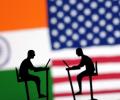
A think tank, GTRI, has urged India to resist US pressure regarding its UPI policies, advocating for the defence of competition, policy autonomy, and the long-term sustainability of its payments ecosystem. This comes as the Lok Sabha passed a bill allowing charges on UPI transactions, a move GTRI suggests should not be influenced by foreign trade complaints.

A think tank, GTRI, has urged India to resist US pressure regarding its UPI policies, advocating for competition, policy autonomy, and a sustainable payments ecosystem. This comes as the Lok Sabha passed a bill allowing charges on UPI, and the US has criticised India's digital payment systems, raising concerns about the future of India's digital payment landscape.

India has clarified its policy regarding participation in the 2027 South Asian Federation (SAF) Games in Pakistan, stating decisions will align with national sports policies and international governing bodies. While bilateral sporting engagements with Pakistan remain suspended, Indian athletes are permitted to compete in multilateral events. The government also aims to simplify visa processes to position India as a global sports hosting destination.
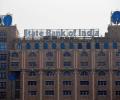
State Bank of India's latest report highlights a 'chalk and cheese' divide in the Reserve Bank of India's recent policy communications, with the Monetary Policy Committee minutes showing a hawkish tone while the Governor's statements are more data-dependent, leading to market uncertainty regarding future interest rate hikes.

The Ministry of External Affairs stated that India's participation in the 2027 SAF Games in Pakistan will be guided by the sports ministry's policy, which permits Indian athletes to compete in events with Pakistani participants and vice-versa. Separately, the MEA also commented on the ongoing legal proceedings for seven foreign nationals, including a US citizen and six Ukrainians, who were recently chargesheeted by the NIA for illegal entry and movement, though not under UAPA at this stage.

Premature surrender and withdrawal of life insurance policies in India have surpassed maturity payouts over the past five years, indicating a growing trend of policyholders exiting long-term policies before their full tenure, according to data presented in the Lok Sabha.

The Supreme Court has urged the CBSE to reconsider the implementation of its three-language policy for Class 9 students, emphasising that children should not be subjected to undue pressure. The court highlighted concerns about infrastructure, the starting point of the policy, and the definition of 'native' languages.

The Wrestling Federation of India (WFI) has implemented a new two-stage trial system for the 2026 Senior World Championships. This policy allows wrestlers participating in the Asian Games to also compete for a spot in the World Championships team through a "final trial," addressing the overlap between the two major events. The first phase of trials is scheduled for September 14-15, with specific provisions for certain weight categories and U23 championships.

Congress leader Rahul Gandhi launched a scathing attack on the BJP-RSS, labelling them a "bunch of jokers" with no understanding of India, and criticised Prime Minister Narendra Modi's foreign policy as merely "hugging leaders." He also claimed the RSS has become an instrument of large capital, serving Adani and Ambani, and vowed that the Congress would keep pressure on the government until Modi and Shah resign. The BJP hit back, calling Gandhi immature and out of depth.

Mercedes-Benz India plans to continue introducing hybrid vehicles, including the new AMG E 53 plug-in hybrid EV, to meet consumer demand, viewing hybrids as a crucial bridge to full electrification despite the absence of supportive government policies.

Understanding a product and assessing its suitability improve the chances of staying invested. Use life insurance mainly to cover risk, not to seek returns.

India and China are in what experts call 'a cooperation-versus-competition situation'.
Pakistan is set to host the 14th South Asian Games in April next year across Islamabad, Lahore, and Peshawar, after a six-year delay. While the South Asia Olympic Council has approved the dates and venues, India's participation remains uncertain due to political tensions, despite its representative attending the planning meeting.

Bangladesh-China and Bangladesh-US relations have evolved from reluctant engagement to increasingly consequential strategic partnerships.

S&P Global Ratings has affirmed India's sovereign credit rating at 'BBB' with a stable outlook, citing the country's dynamic and fast-growing economy, strong external balance sheet, and stable institutions that ensure policy predictability.

'It beggars belief that Saudi Arabia would deploy military force against India, a top partner and market.'

InsuranceDekho and RenewBuy have merged to establish India's largest artificial intelligence (AI)-enabled insurance distribution platform, targeting a significant premium book and extensive reach across the country.

'India is trying to project that it can engage with the world in a different way too.'

Former Chief Economic Adviser Krishnamurthy V Subramanian outlines India's strategy to become a USD 55 trillion economy by 2047. The plan hinges on leveraging its young demographic in AI, dominating sunrise sectors like space and defence tech, attracting FDI, and achieving sustained 8% GDP growth.

Economists highlight that resolving domestic policy bottlenecks, particularly through land reforms and improving the ease of doing business, will be critical for Prime Minister Narendra Modi's 'next-generation reforms' and India's economic transformation towards its 'Viksit Bharat' vision for 2047.

We are back to the 1971 moment with both China and the US supporting Pakistan, asserts Colonel Anil A Athale (retd).

As India's decline continued on global indices, the government first blamed methodology and then motives. This is where we remain today as we wish each other and ourselves a happy Independence Day, points out Aakar Patel.

India has removed a key regulatory hurdle, allowing exporters to receive payments in Indian currency while retaining incentives under the country's foreign trade policy, a move aimed at promoting wider use of the rupee in international trade.

Analysts predict that developments in the West Asia conflict, crude oil prices, and upcoming US inflation data will be the primary factors influencing the Indian stock market next week, alongside foreign investor activity and global market trends.

There is no answer to the question of how IN-SPACe invited EOIs for ISRO's mature rockets and whether it was based on any government policy decision.

A rocket designed and developed by ISRO is being transferred to industry for production.
Nine ISRO associations want to know whether this is simply an effort to expand India's industrial capacity or part of a larger policy under which ISRO itself will eventually withdraw from rocket manufacturing.

Indian women's cricket captain Harmanpreet Kaur maintained the BCCI's 'No Handshake' policy with Pakistan's Fatima Sana at the toss of their T20 World Cup match, a policy reportedly initiated after a terror attack and military operation last year.

The BRICS Youth Ministers' Meeting, organised by India's Sports Ministry, successfully concluded in Visakhapatnam. Presided over by Sports Minister Mansukh Mandaviya, the meeting built upon previous youth engagements, focusing on developing young leaders and promoting youth cooperation among BRICS nations.

The Supreme Court has quashed all FIRs registered against students who protested the NEET-UG paper leak, calling it a "major victory" for dissent. The court also noted the government's commitment to formulate a pan-India compensation policy within three months for families of students who died by suicide due to the crisis. The CJP, which led the protests, welcomed the decision but vowed to monitor the policy's implementation.

The BCCI is committed to improving player preparation for major series in South Africa, England, New Zealand, and Australia (SENA countries) by ensuring adequate rest, acclimatisation, and practice matches, according to secretary Devajit Saikia.

'Every period of excessive optimism eventually gives way to a correction, while periods of extreme pessimism often create the best investment opportunities.'

The Unified Payments Interface (UPI) has completed a decade since its launch, becoming the backbone of India's digital payments ecosystem. It has seen exponential growth in transaction volume and value, expanding financial inclusion and setting a global benchmark for real-time payments.

Olympian Vinesh Phogat has moved the Delhi High Court challenging two show-cause notices issued by the Wrestling Federation of India (WFI) and subsequent disciplinary proceedings.
Football administrator Ranjit Bajaj has filed a writ petition in court, seeking directions for the All India Football Federation (AIFF) to immediately schedule and complete elections for its Executive Committee. Bajaj argues that the AIFF has already adopted a compliant constitution, making further deferment unjustified.

Oriental Insurance has insured around 100 Ganesh pandals this year compared with only 20-30 last year.
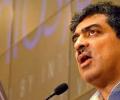
Infosys co-founder Nandan Nilekani predicts that large corporations in India will lose jobs due to automation and AI, while millions of small businesses will drive future employment growth. He advocates for deregulation, simplified business interfaces, and digital platforms to support small entrepreneurs and a gig economy workforce.
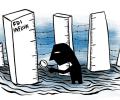
India has attracted foreign direct investment (FDI) worth approximately 4,896 crore across 29 projects since May, following the government's relaxation of norms under Press Note 2 of 2026. The revised rules permit investment without government approval from entities with up to 10 per cent non-controlling ownership by land-bordering countries.
A report by policy think tank The Dialogue reveals that India's artificial intelligence (AI) ecosystem is primarily constrained by a shortage of skilled talent and a lack of data standardisation, rather than market concentration. The study, which surveyed 308 stakeholders, found that talent availability and data usability are major concerns, with a significant reliance on open-source AI models.
